There is a particular kind of anticipation in growing one of our own cactus crosses from seed.
We select two parent plants whose traits we hope will combine in an interesting way. Then we collect pollen from the father plant and use it to pollinate the mother. We watch for a fruit to form, harvest it when it ripens, and clean and save the seeds inside. After sowing those seeds, we nurture the tiny seedlings as they slowly grow toward maturity. What we cannot foresee is the exact form and color of the flower that will eventually open.
For years, that first flower exists only as possibility.
Then one spring morning, we see it: a new bud. We watch with anticipation as it slowly swells and takes shape. Finally, it is ready to open, revealing its own brilliant display of color.
Our El Capitan × Orange California seedling flowered for the first time in July 2026. The bloom was vivid and unexpected, with bright magenta petals, a glowing coral-orange center, and a loose, lightly ruffled form. It was not simply a copy of either parent. It was its own flower—the first visible answer to a question we had asked years earlier when the original cross was made.
That is one of the most rewarding moments in cactus hybridizing. A seedling we have watched grow quietly for years suddenly shows us something no one has seen before.
The wait becomes a flower.
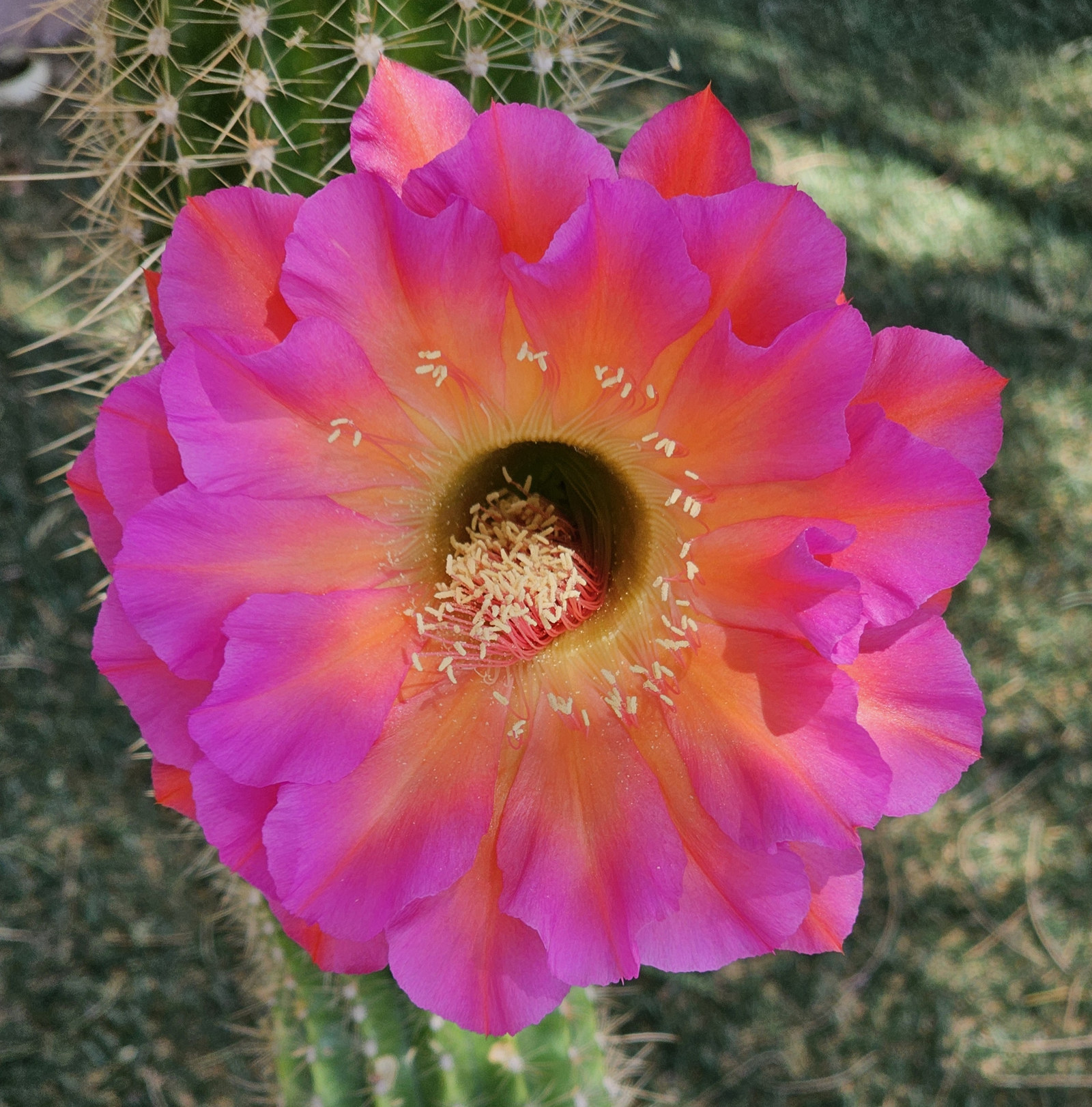
The First Answer From El Capitan × Orange California
When the flower opened, we immediately knew it was not going to be a simple copy of either parent. To understand why it surprised us, it helps to see the two flowers behind the cross.
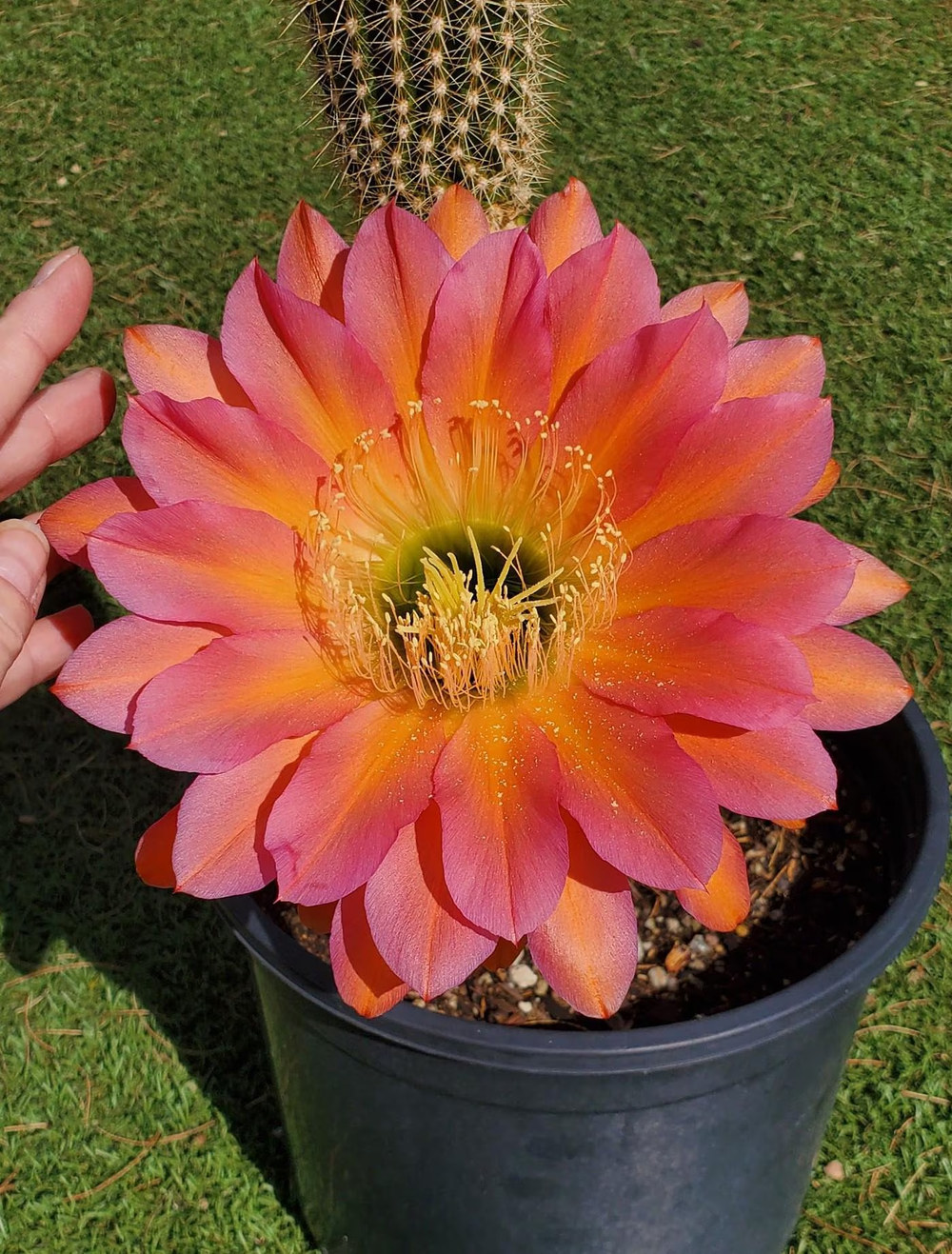
El Capitan — a German Echinopsis hybrid created by Thomas Stöfer.
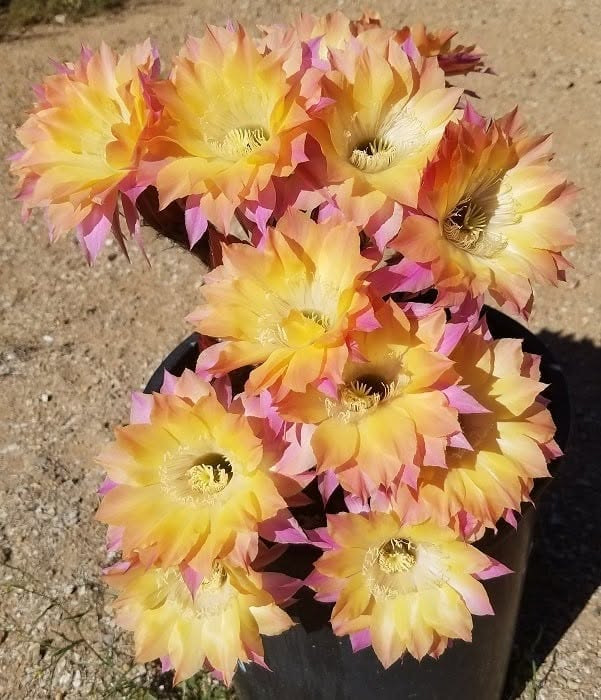
Orange California — a Hans Britsch hybrid from Soehrensia × Trichocereus schickendantzii and a sister of Flying Saucer.
Seen beside the new seedling, the parents make the mystery of hybridizing visible. Neither flower clearly predicts the vivid magenta petals, glowing coral-orange center, and lightly ruffled form that appeared in their offspring. We knew the genetics that had gone into the seed, but we could not know how those traits would recombine when the first flower finally opened.
The parent plants differ not only in flower, but in plant form as well. El Capitan grows as a rounded, almost dome-shaped Echinopsis, while Orange California is taller and more heavily spined. Our seedling follows Orange California in its overall growth habit, developing a taller body, but its spines are finer and more delicate. Even before the first flower opened, the plant was already showing us that it would become its own expression of the cross.
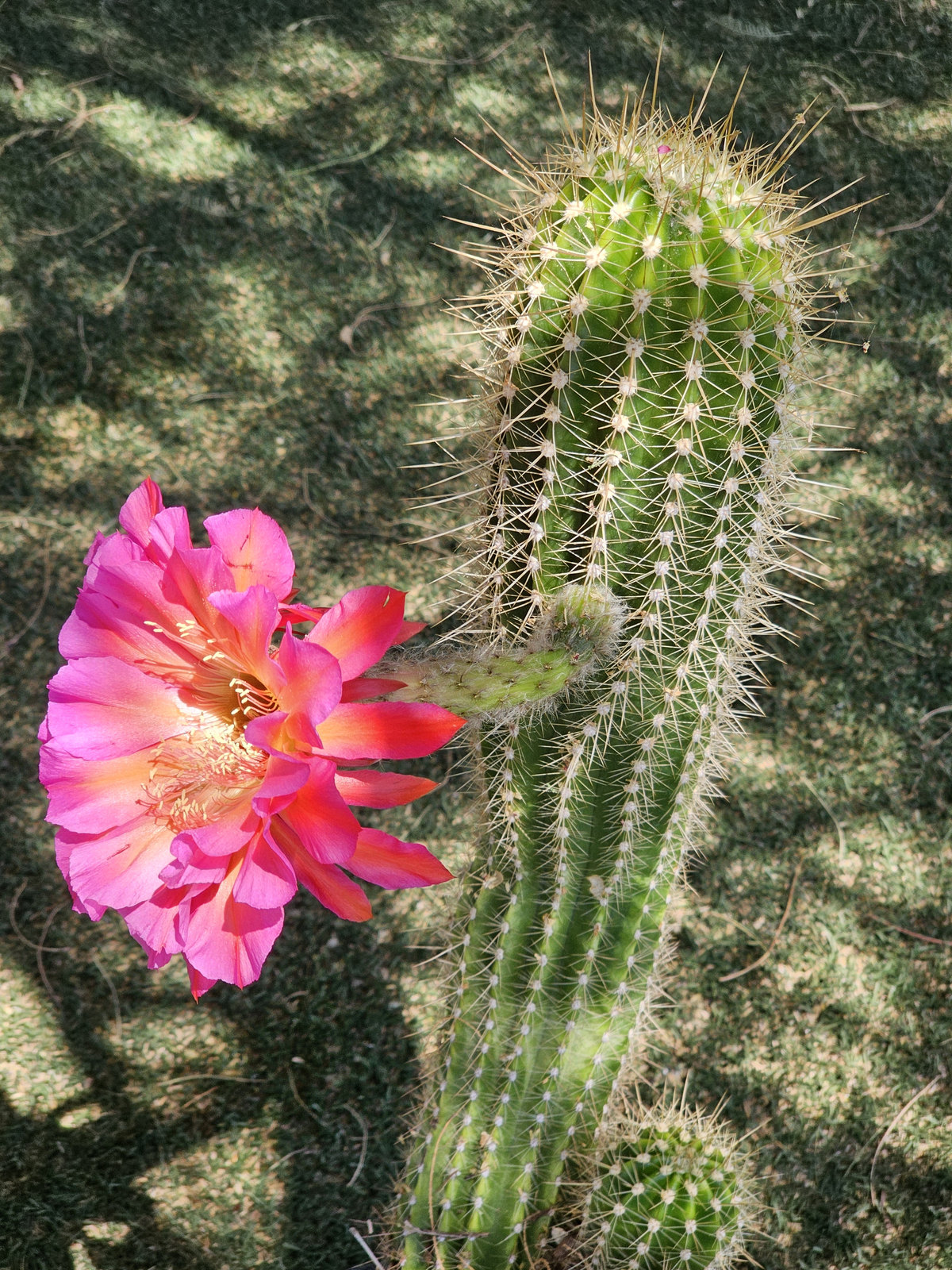
A Flower That Had Never Existed Before
Standing over the open bloom, we were looking at more than a beautiful flower. This exact combination of color, form, and plant habit had never existed before.
Years earlier, we had selected the parents and made the cross, but the seedling had done its own quiet work, combining those genetics in a way we could neither design nor predict. We had helped begin its story, nurtured it through its early growth, and waited for it to mature. Now, with its first flower open before us, the plant was finally introducing itself.
That is what made the moment feel so personal. The vivid magenta petals and glowing orange center were completely new, yet they had grown from choices we made and care we continued to give long before we knew what the result would be.
The First Bloom Is Only the Beginning
A first flower gives us our first real look at a seedling, but it may not show everything the plant will become. As the cactus matures, develops a stronger root system, and settles into its growing conditions, later flowers may open larger, more richly colored, or with a fuller and more defined shape.
Maturity can also change the way the plant blooms. A young seedling may begin with a single flower, then produce several buds in later seasons. Eventually, some plants will open four, five, or even more flowers at once, creating a mass bloom that transforms the entire plant into a display of color.
That means the first bloom is both an answer and an introduction. It tells us enough to begin understanding the plant while leaving room for it to continue revealing itself over future seasons.
The Story Continues
When the first flower closes, the next chapter begins. We now know what the seedling can show us, but we still have much to learn from it.
We photograph the flower and plant, record the cross and first-bloom date, then wait to see how its flowers develop over future seasons. As the plant matures, we may decide that it deserves a name and consider how its traits might contribute to future crosses.
We also attempted to pollinate this first flower. Our pollination did not produce a fruit, but that does not mean the plant will never produce seeds for us. A first bloom may not set seed, and compatibility, pollen condition, timing, weather, and the maturity of the plant can all affect the outcome. When it blooms again next season, we can try another pollen parent or use its pollen on a different flower and see whether we get a better result.
This first bloom answered one question: What kind of flower did this seedling produce? Now new questions begin. Will later blooms be larger or more richly colored? Will the plant eventually produce a mass bloom? Will it become a useful parent and pass its vivid color or finer spination into a new generation?
The story that began with El Capitan and Orange California is still unfolding.